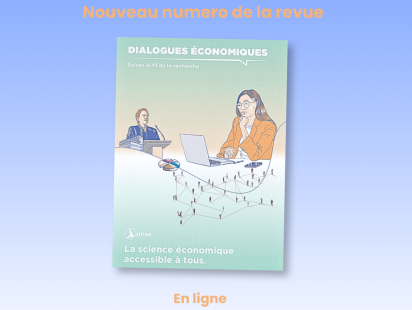
An online media outlet dedicated to making economics accessible, bridging the gap between academic knowledge and the general public. Dialogues économiques publishes articles, video interviews, and infographics, twice a month, providing information on a wide range of topics addressed by economic research. Available in both French and English, the content may be reproduced in its entirety, provided the authors and the source Dialogues économiques are credited (CC BY-NC-ND). Readers can subscribe to receive each new publication directly in their inbox.

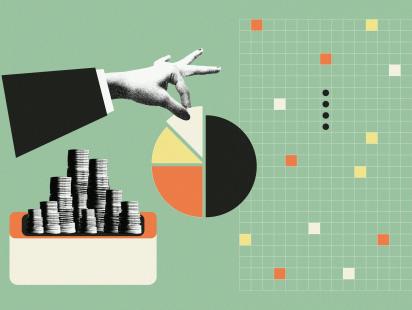
Development aid: between solidarity and self-interest

Over the last few decades, the amount of money given in development aid has increased considerably in recent decades, from 86 billion constant US dollars in 2002 to 223 billion in 2023. However, challenges associated with development persist, raising the question of aid effectiveness. Is it the size of the budgets allocated that is lacking, or is it the way in which this aid is spent? Economist Nathalie Ferrière explores the issue.
JANUARY 7, 2025
JANUARY 7, 2025

Phone Scams: Can We Outsmart the Fraudsters?

Have you ever hesitated when confronted with a text message reminding you to pay an unpaid bill? Or received a message claiming to be from your bank, urging you to update your personal information? Looking at the case of Kenya, economists Elif Kubilay, Eva Raiber, Lisa Spantig, Jana Cahlíková, and Lucy Kaaria examined the ability of individuals to detect fraud attempts.
FEBRUARY 3, 2025
FEBRUARY 3, 2025

When stress enhances cognitive abilities

Stress is often perceived as a hindrance, but a study by economists suggests that, in certain cases, it can actually boost performance. Students exposed to stressful topics—such as unemployment or the mental health consequences of the pandemic—respond by sharpening their focus and improving their performance.
MARCH 18, 2025
MARCH 18, 2025

Easing the burden on pension systems by investing in health

Pension systems worldwide are facing increasing strain due to rising life expectancy and improved health. A team of economists has proposed an innovative pension model linked to the health of the population, which could ease the burden on public finances.
APRIL 1, 2025
APRIL 1, 2025

Our Experiences Shape Our Future Choices

We make choices every day. But are our preferences fixed, or do they evolve as we experience new things? This question is explored in a recent study by economic researchers.
APRIL 29, 2025
APRIL 29, 2025

Protectionism and growth: a question of equilibrium(s)

Protectionism is a hotly debated topic on the international stage. Often framed as a response to the economic disruptions of globalisation, this policy approach seeks to strengthen domestic industries against foreign competition. However, a recent study by economic researchers suggests that its impact on economic growth and stability is more complex, especially in emerging markets.
MAY 27, 2025
MAY 27, 2025

In Peru, small-scale farmers struggle with the impacts of climate change

Droughts, heat waves, or extreme rainfall, the Andean and tropical regions are among the first to be affected by the uncertainties of climate change. In the face of increasingly unpredictable weather conditions, Peruvian agriculture is under pressure. A team of economists is using new data to measure the impact of these weather shocks and its negative consequences on Peruvian agricultural production.
JUNE 24, 2025
JUNE 24, 2025

A good wife? When marital reputation shapes economic choices

To buy or not to buy? When we weigh the decision to purchase something, a multitude of factors come into play. But is our partner’s opinion among them? This question becomes especially critical in households where incomes are extremely limited. To investigate, three economists recently carried out a large-scale experiment in Malawi.
OCTOBER 6, 2025
OCTOBER 6, 2025

Social networks: who counts most?

March 2019, Paris region. Two men are violently dragged out of a van and beaten. The cause: a rumour spread on social media, claiming that “white vans” were kidnapping children. Analysis of social media can help us to understand how such rumours spread: distinguishing between the target and the source within the network can contribute to a better understanding of how such information can be disseminated, according to the results of a recent theoretical study.
OCTOBER 26, 2025
OCTOBER 26, 2025

Working Too Much Seriously Harms Your Health: The American Example

Why do Americans live shorter lives than Europeans, even though they spend far more on healthcare? This is the paradox explored by economists Tanguy Le Fur and Alain Trannoy, who ask: could working time be part of the explanation?
NOVEMBER 4, 2025
NOVEMBER 4, 2025